Geotechnical Investigations Along the EACOP Pipeline (MLBV/LLHT) Substations
The East African Crude Oil Pipeline (EACOP) is a major infrastructure project designed to transport crude oil from the oil fields in Uganda to the port of Tanga in Tanzania, where it will be exported to international markets. The Uganda section of the pipeline is 296km cutting through 28 substations, 3 town councils and 171 villages in 10 districts of Hoima, Kikuube, Kakumiro, Kyankwanzi, Mubende, Gomba, Sembabule, Lwengo, Rakai, and kyotera.
Challenge
The EACOP project required a detailed geotechnical investigation across multiple sites located approximately 200 km apart over a 1,000 km distance. The terrain along the proposed pipeline presented various challenges, including varying soil conditions, bedrock depths, and remote site access. The investigation called for accurate subsoil profiling to ensure the pipeline's long-term stability and safe construction, with the need for boreholes and rigorous environmental standards. Additionally, strict timelines and safety standards had to be met while working in remote areas that were difficult to access with heavy drilling equipment.
Solution
Our team deployed advanced geotechnical techniques tailored to the specific challenges of the project. This included precise borehole drilling, laboratory soil analysis, and geophysical surveys to assess subsurface conditions. We implemented remote-access drilling methods and adhered to strict environmental and safety protocols to ensure compliance and timely project delivery.
Results
The geotechnical investigation is still ongoing and will becompleted on schedule, providing a comprehensive factual report that will include detailed logs of soil and rock conditions, groundwater levels, and environmental assessments. The data will enable the EACOP engineering team to make informed decisions about the design and construction of substations, ensuring the stability of the pipeline. The successful execution of this project will not only meet the technical and environmental requirements but also set a benchmark for safety and efficiency in geotechnical services for large-scale infrastructure projects.
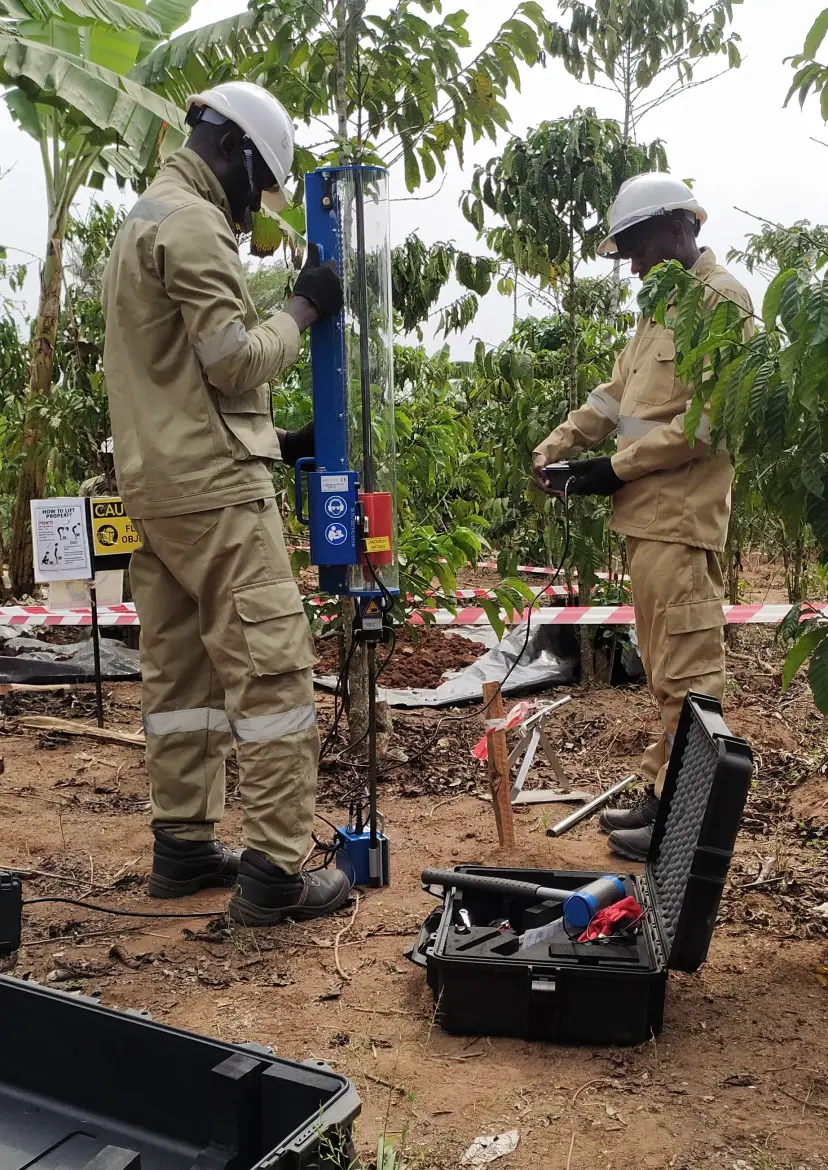
PANDA Tests
We used this portable method for evaluating soil strength
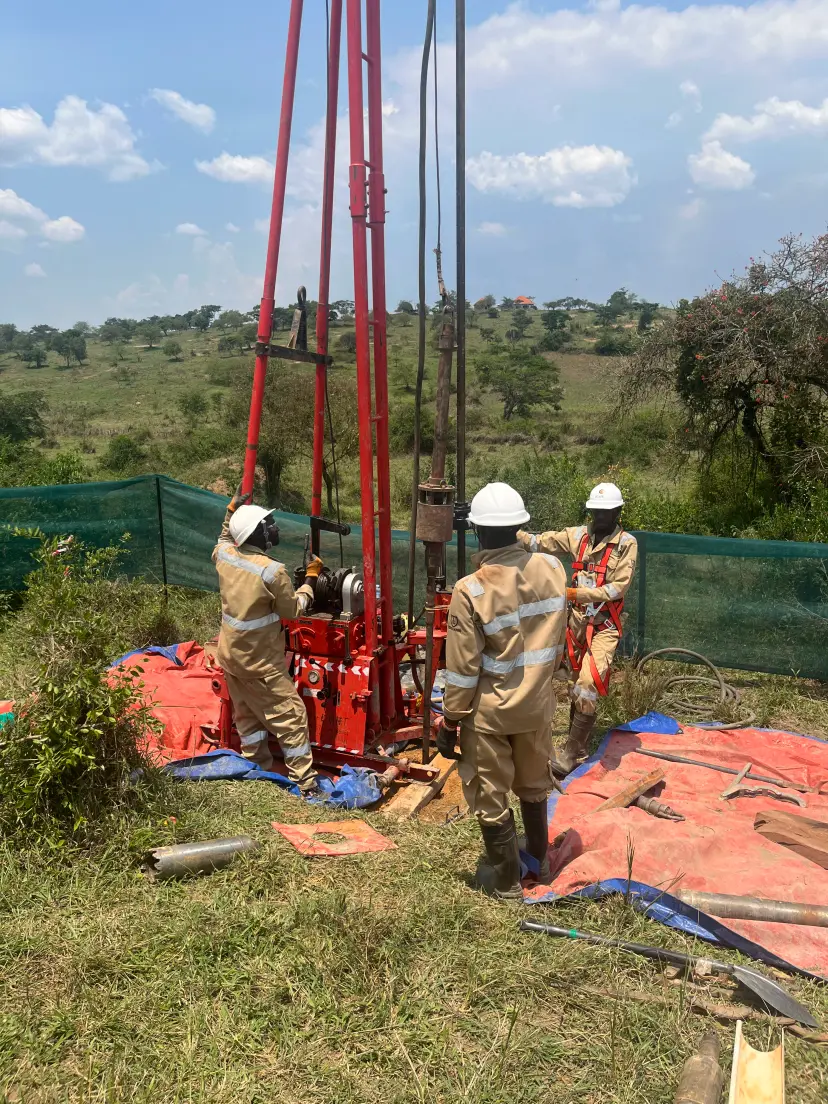
Rotary Drilling
Rotary Core Drilling was carried out to various depths and core samples recovered for laboratory testing. Permeability Test was also conducted in the boreholes
Thermal Conductivity Tests
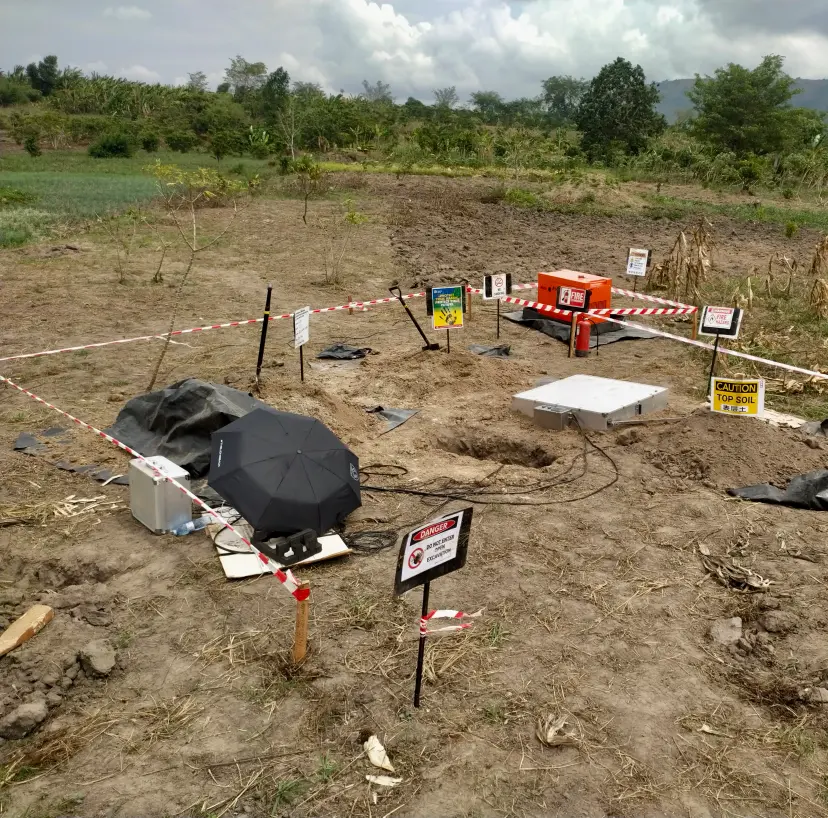
Test pits were excavated to 1.5m depth to conduct the Thermal Conductivity Test.